
Disclosure: This post contains affiliate links. We may earn a small commission if you purchase through our links, at no extra cost to you. We only recommend products we've thoroughly researched.
Rosemary oil for hair growth went from herbal remedy to mainstream skincare phenomenon after a single 2015 clinical study put it head-to-head with 2% minoxidil — the most widely used OTC hair loss treatment — and found comparable results. Since then, it's become one of the most searched hair care topics globally and a mainstay of scalp care routines from TikTok to trichologist offices.
But the enthusiasm deserves careful examination. What does the research actually show? Who does rosemary oil work for? And how do you use it correctly to get results rather than just going through bottles of oil with nothing to show for it?
What Is Rosemary Oil?
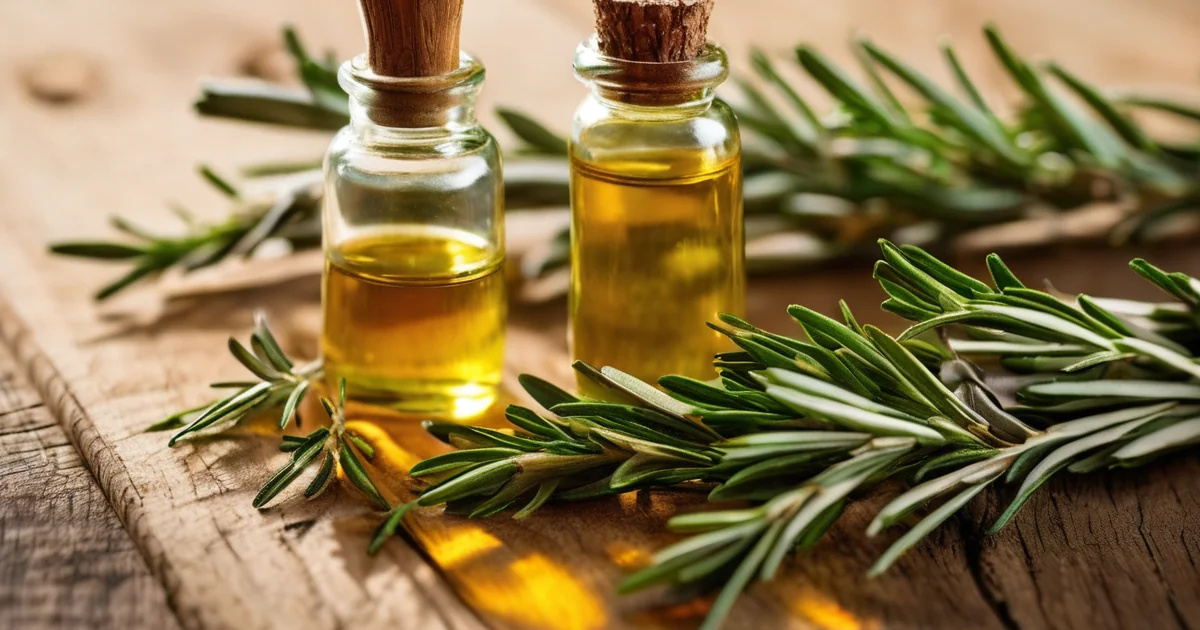
Rosemary oil (Rosmarinus officinalis) is an essential oil extracted from the rosemary plant by steam distillation. Its key bioactive components for hair growth purposes are:
- Carnosic acid — the compound most studied for hair growth effects; promotes nerve growth factor (NGF) recovery in scalp tissue
- Ursolic acid — inhibits DHT (dihydrotestosterone) — the androgen hormone primarily responsible for androgenetic alopecia (male and female pattern hair loss)
- 1,8-cineole (eucalyptol) — increases scalp circulation
- Rosmarinic acid — anti-inflammatory properties that reduce scalp inflammation contributing to follicle miniaturization
The Research: What Does Science Actually Say?
The 2015 Study (The One Everyone Cites)
The landmark study published in Skinmed (2015) by Panahi et al. randomized 100 patients with androgenetic alopecia into two groups:
- Group 1: Rosemary oil applied to scalp twice daily for 6 months
- Group 2: 2% minoxidil applied to scalp twice daily for 6 months
Results: Both groups showed statistically significant increases in hair count compared to baseline. Crucially, there was no significant difference between the groups at 6 months — rosemary oil produced comparable hair count increases to 2% minoxidil.
Rosemary oil also produced significantly less scalp itching and irritation than minoxidil — a common complaint that leads many people to discontinue minoxidil.
Important Caveats
The study used rosemary leaf extract diluted to a standardized concentration — not pure essential oil applied directly from a bottle. The concentration and standardization of the preparation matter.
The study was conducted on androgenetic alopecia specifically — pattern hair loss driven by DHT sensitivity. Results may not generalize to other causes of hair loss (telogen effluvium, alopecia areata, nutritional deficiency).
Sample size limitation: 100 participants is modest. The study needs replication with larger populations for confident conclusions.
Additional Supporting Research
- A 2022 study in Phytotherapy Research found that carnosic acid (rosemary's key active) promoted hair follicle proliferation in in vitro testing
- A separate animal study demonstrated that rosemary extract applied topically increased follicle activity comparable to 3% minoxidil in the mouse model
- Multiple studies confirm rosemary's ability to inhibit 5-alpha-reductase (the enzyme that converts testosterone to DHT) — directly addressing the mechanism of androgenetic alopecia
The honest summary: The evidence is genuinely promising — stronger than for most herbal hair growth remedies — but it's not conclusive. The single human clinical study needs replication, and the mechanism for androgenetic alopecia (DHT inhibition) is biologically plausible.
Who Is Rosemary Oil For?
Most likely to benefit:
- Androgenetic alopecia (male or female pattern hair loss) — the DHT-inhibition mechanism is most relevant here
- Diffuse thinning from scalp inflammation — anti-inflammatory properties address a contributing factor
- Poor scalp circulation — the vasodilatory effect of rosemary oil compounds is meaningful
- Those who can't tolerate minoxidil's side effects (scalp irritation, initial shedding, systemic absorption concerns)
Less likely to benefit:
- Alopecia areata (autoimmune hair loss) — different mechanism not well-addressed by rosemary
- Acute telogen effluvium from nutritional deficiency, stress, or medical cause — the underlying cause must be resolved
- Scarring alopecia — follicle destruction is not reversible with topical treatments
Not a substitute for medical evaluation: Significant or rapid hair loss warrants a trichologist or dermatologist consultation before self-treating. Blood tests (ferritin, thyroid, vitamin D, zinc) rule out nutritional and hormonal causes that topical treatments won't address.
How to Use Rosemary Oil for Hair Growth (Correctly)
Option 1 — Diluted Rosemary Essential Oil (DIY)
The most economical approach, closest to the study protocol.
What you need:
- 100% pure rosemary essential oil (not fragrance oil)
- Carrier oil: jojoba (most scalp-compatible), grapeseed, or fractionated coconut oil
Dilution ratio: 2–3 drops of rosemary essential oil per teaspoon (5ml) of carrier oil = approximately 1–2% concentration. Never apply undiluted rosemary essential oil directly to scalp — it can cause irritation and chemical burns at full strength.
Application:
1. Part hair into sections
2. Apply diluted oil directly to scalp skin (not hair shaft)
3. Massage in for 3–5 minutes — this is important; massage mechanically stimulates follicles alongside the oil's chemical action
4. Leave on for at least 30 minutes (overnight is ideal for maximum penetration)
5. Shampoo out thoroughly
Frequency: Daily or every other day for best results. The 2015 study used twice-daily application.
Option 2 — Formulated Rosemary Scalp Products
Pre-formulated products with standardized rosemary extract concentrations — more consistent than DIY but more expensive.
Recommended products:
Mielle Organics Rosemary Mint Scalp & Hair Strengthening Oil (~$10):
The most widely used and discussed rosemary hair oil. Combines rosemary with mint (additional scalp stimulation), biotin, and other strengthening botanicals. Excellent price for the volume. Apply to scalp, massage in, leave overnight or rinse after 30 minutes.
Vegamour GRO Hair Serum (~$52):
Water-based scalp serum (not oil) with phyto-actives including mung bean and red clover (both with DHT-inhibiting properties) alongside clinically studied plant extracts. The non-greasy format makes it easier for daily use without washing. Clinically studied — their own trials show 76% reduction in shedding and 52% improvement in hair density after 4 months.
The Ordinary Multi-Peptide Serum for Hair Density (~$22):
Contains peptides, caffeine, and biotin alongside botanical extracts. Not a rosemary-specific product but addresses multiple hair growth pathways simultaneously. Water-based, lightweight, can be used daily without washing out.
Briogeo Scalp Revival Charcoal + Tea Tree Scalp Treatment (~$42):
Primarily a scalp clarifier but includes peppermint and tea tree as circulation stimulants. Good for combination approach: clarify + stimulate.
Kérastase Genesis Sérum Anti-Chute Fortifiant (~$62):
Luxury formulation with edelweiss stem cells, aminexil (a professional anti-hair loss active), and strengthening botanical extracts. For those willing to invest in a professional-grade scalp treatment.
Rosemary Oil vs Minoxidil: Which Should You Choose?
| Factor | Rosemary Oil | Minoxidil 2% |
|---|---|---|
| Evidence quality | One human RCT, supporting in vitro | Multiple large RCTs over 30+ years |
| Efficacy | Comparable to 2% minoxidil (per 2015 study) | Well-established for androgenetic alopecia |
| Side effects | Minimal (occasional mild irritation) | Scalp irritation, initial shedding, systemic absorption concerns |
| Cost | Low (DIY: ~$5–10/month) | Low (generic minoxidil: ~$10–15/month) |
| Maintenance | Continued use required to maintain results | Continued use required — stopping reverses gains |
| Prescription required? | No | No (2% OTC; 5% OTC for men) |
| Speed of results | 3–6 months | 4–6 months |
Recommendation: For mild to moderate androgenetic alopecia or diffuse thinning without confirmed medical cause, rosemary oil is a reasonable, low-risk starting point. For significant pattern hair loss — particularly male pattern baldness beyond early stages — minoxidil (or finasteride, which requires prescription) has substantially stronger evidence and is likely more effective. Many people combine both: rosemary oil for its anti-inflammatory and circulation benefits alongside minoxidil for its stronger follicle stimulation.
What to Expect: Timeline
- Weeks 1–4: Scalp health improvements — reduced itching, less tightness, scalp feels more balanced
- Months 1–3: Reduced shedding in some users; no new growth yet (hair growth cycle takes time)
- Months 3–6: Early signs of new growth — baby hairs at temples or diffuse areas
- Month 6+: Meaningful changes in density visible in before-and-after comparison
Patience is essential. Hair growth cycles operate on a 3–6 month timescale. Stopping after 6–8 weeks because "nothing is happening" is the most common reason people don't see results with any hair growth treatment — rosemary or otherwise.
Frequently Asked Questions
Q: Does rosemary oil actually work for hair growth?
A: Based on current evidence — probably yes, particularly for androgenetic alopecia. The 2015 randomized controlled trial comparing rosemary oil to 2% minoxidil showed comparable hair count improvements at 6 months. The mechanism is biologically plausible (DHT inhibition, improved circulation, anti-inflammatory action on follicles). However, this single study needs replication before rosemary oil can be considered definitively proven. It's a low-risk, evidence-supported option — not a certainty.
Q: How long does rosemary oil take to grow hair?
A: Expect a minimum of 3–4 months before any visible change, and 6 months for meaningful results. Hair growth operates in cycles (anagen — active growth, catagen — transition, telogen — resting/shedding) that take months to complete. The 2015 study ran for 6 months; earlier timepoints showed less significant results. Apply consistently daily or every other day and photograph monthly in consistent lighting to track progress objectively — subjective assessment at 2 months rarely captures the actual change occurring.
Q: Can I use rosemary oil on my scalp every day?
A: Yes — daily application is safe and aligns with the study protocol (twice daily in the 2015 study). Use a properly diluted formula (2–3 drops in a carrier oil, never undiluted) if using pure essential oil. Pre-formulated products like Mielle Rosemary Mint Oil are designed for frequent use. If leaving oil on overnight, ensure your shampoo effectively removes it — buildup can block follicles, counteracting the intended benefit.
Q: Is rosemary oil better than minoxidil for hair growth?
A: "Better" depends on your criteria. Rosemary oil has fewer side effects and is more pleasant to use — minoxidil commonly causes scalp irritation, initial shedding, and has systemic absorption concerns (particularly for women). In the one head-to-head study, results were comparable at 6 months. However, minoxidil has 30+ years of large-scale RCT evidence; rosemary has one study. For people who want maximum evidence support, minoxidil remains the gold standard. For those who prioritize lower side effects, a more natural approach, or want to avoid minoxidil's maintenance requirements, rosemary oil is the strongest herbal alternative currently available.
Conclusion
Rosemary oil for hair growth is the rare herbal remedy with genuine clinical trial support rather than purely anecdotal backing. The 2015 study's head-to-head comparison with minoxidil is compelling, the mechanism is biologically plausible, the side effect profile is excellent, and the cost is minimal. For anyone experiencing early-stage androgenetic alopecia or diffuse thinning, it's the most evidence-supported natural first step — applied consistently, with appropriate expectations, for a minimum of 6 months.
Daily application, scalp massage, and before-and-after photography are the three non-negotiable components of an effective protocol. The oil alone, without consistent application and mechanical massage, is unlikely to produce meaningful results.
Continue with our complete scalp care routine guide and how to grow hair faster.
0 Comments
Leave a Comment
Your email won't be published. Comments are moderated.
No comments yet. Be the first to share your thoughts!