
Disclosure: This post contains affiliate links. We may earn a small commission if you purchase through our links, at no extra cost to you. We only recommend products we've thoroughly researched.
Razor bumps are among the most persistent and frustrating grooming problems for men — particularly for those with curly or coarse hair. Understanding the mechanism behind razor bumps transforms the approach from reactive (treating bumps after they appear) to preventive (systematically eliminating the conditions that create them).
This guide covers how to shave without razor bumps using technique, preparation, and products that address the actual cause rather than treating symptoms.
What Razor Bumps Actually Are
Razor bumps — medically known as pseudofolliculitis barbae (PFB) — are not the same as razor burn.
Razor burn: Redness and irritation immediately after shaving, caused by mechanical friction between razor blade and skin. Usually resolves within hours.
Razor bumps (PFB): Papules and pustules that develop 1–3 days after shaving. Caused by curved hair that grows back into the skin (ingrown hairs) or that curls below the skin surface after cutting. The body treats the ingrown hair as a foreign body, triggering an inflammatory response that creates the bump, redness, and sometimes infection.
Why curly and coarse hair is most affected: Straight hair exits the follicle and continues outward. Curly hair, particularly the tightly coiled type common in Black and Southeast Asian men, has a follicle shape that causes the hair to curve back toward the skin as it grows — especially when cut sharp and close by a razor blade. The sharper the cut end, the more easily it re-penetrates skin.
PFB affects an estimated 45–83% of Black men who shave regularly. Understanding this is a structural skin problem (not caused by poor hygiene or wrong products) is the starting point for managing it effectively.
Razor Bump Prevention Protocol Summary
| Phase | Action | Why It Matters |
|---|---|---|
| Before shaving | Shower first or hot towel 2–3 min | Hydrated hair is 60–70% softer — less blade pressure needed |
| Before shaving | Apply shaving cream/gel generously | Lubrication reduces friction and blade drag |
| During shaving | Shave with the grain on first pass | Against-grain on first pass causes hair to cut below skin level |
| During shaving | Zero blade pressure | Weight of razor is sufficient; pressing causes irritation |
| During shaving | Rinse blade every 2–3 strokes | Clogged blades drag and pull rather than cut |
| After shaving | Apply alcohol-free post-shave balm | Reduces inflammatory response before it becomes visible |
| After shaving | Apply benzoyl peroxide or salicylic if prone | Prevents bacterial component of PFB |
The Prevention Protocol: Before You Shave
1. Pre-Shave: Hydrate the Hair
The most important variable in razor bump prevention is how hydrated your beard hair is before the blade makes contact. Fully hydrated hair is 60–70% softer than dry hair — requiring significantly less blade pressure to cut, and leaving a softer, less sharp cut end.
Method: Shave after showering. Two to three minutes of warm (not hot) water exposure fully hydrates beard hair. Never dry shave — not even "just quickly." The mechanical damage from a blade on dry skin is the fastest path to irritation and bumps.
Alternative: Apply a warm, damp towel to the beard area for 2–3 minutes before shaving if showering isn't practical.
2. Pre-Shave Oil (Optional but Recommended for PFB-Prone Skin)
Pre-shave oil applied before shaving cream creates an additional lubricating layer between blade and skin, reducing friction, and helping the razor glide rather than drag.
Recommended: Jack Black Beard Lube Conditioning Shave (~$22) — functions as both pre-shave oil and shaving cream. Art of Shaving Pre-Shave Oil (~$22) — classic pre-shave oil applied under lather.
Apply 3–4 drops to damp face, massage into beard area before applying shaving cream or gel.
3. Choose the Right Shaving Product
What to use:
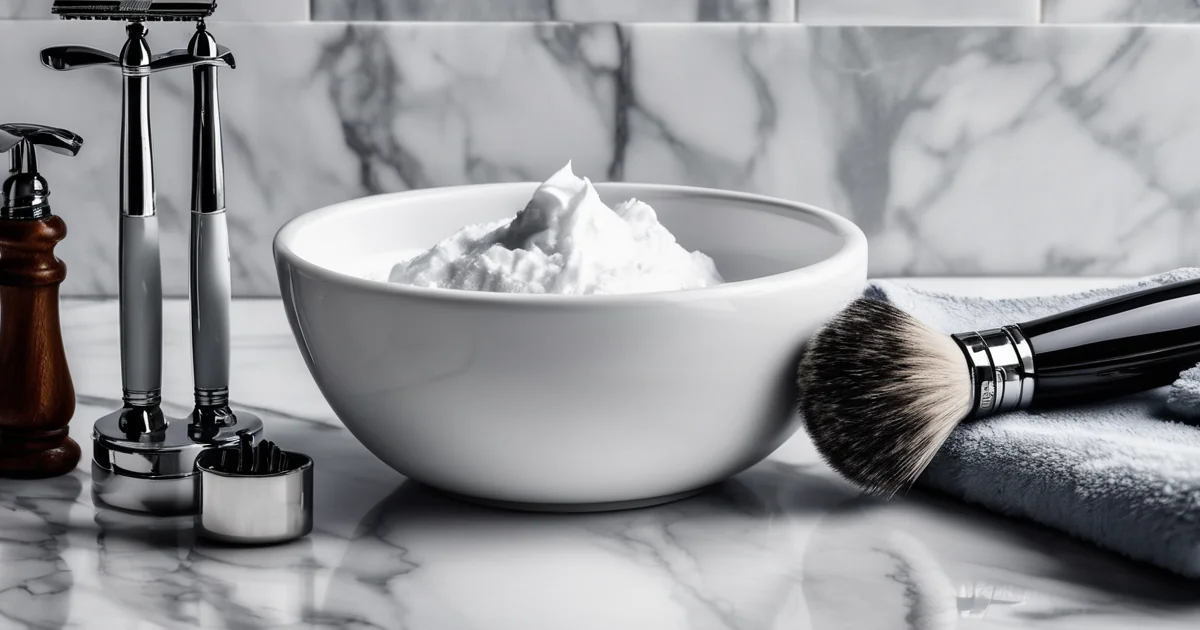
- Shaving cream (traditional, brush-applied): Best lubrication, highest water content, softest on skin. Applied with a badger hair brush that lifts beard hair away from skin for a more efficient cut angle. Taylor of Old Bond Street, Proraso, and Castle Forbes are consistently recommended.
- Shaving gel: Second-best. More accessible, applied directly, still provides good lubrication. Gillette Series Sensitive Skin Shave Gel, CeraVe Therapeutic Shave Gel (fragrance-free, ceramide-containing).
- Shaving foam (pressurized cans): The most common, but typically lowest lubrication — better than nothing, but foam expands air into the product, reducing the lubricating film compared to cream or gel.
What to avoid:
- Shaving without any lubricant
- Soaps (drying, high pH, poor lubrication)
- Products with synthetic fragrance (common irritant, compounds post-shave inflammation)
The Shave: Technique That Prevents Bumps
Razor Selection
Multi-blade cartridge razors and PFB: The biggest mechanical contributor to razor bumps in curly-haired men is multi-blade cartridge design. Each blade cuts hair slightly below the skin surface — a process called "hysteresis." With 3–5 blades, hair is cut progressively further below the skin line, leaving a sharp, sub-surface hair tip that re-enters the skin as it grows. The closer the shave, the more bumps for PFB-prone skin.
Single-blade safety razors for PFB: A single blade cutting at the skin surface (rather than below it) is the most evidence-supported change for reducing PFB. Safety razors (DE razors) with a single blade cut hair at the skin surface rather than below it — still a clean shave, but without the hysteresis effect that sets up ingrown hairs.
Recommended safety razors:
- Merkur 34C Heavy Duty Safety Razor (~$40) — the most widely recommended DE razor for beginners, good weight, mild-to-moderate blade exposure
- Henson AL13 Safety Razor (~$75) — engineered for extremely mild, consistent blade geometry; ideal for sensitive PFB-prone skin
- Edwin Jagger DE89 (~$30) — accessible price, excellent mild shave, great for transitioning from cartridge
Alternative for those who want to stay with cartridges: Use a 2-blade cartridge rather than 3–5 blade. Fewer blades = less sub-surface cut depth.
Shaving Direction: With the Grain First
Always shave with the grain (WTG) first — meaning in the direction hair grows. Going against the grain (ATG) produces a closer shave but dramatically increases the likelihood of hair being cut below the skin surface.
Grain mapping: Facial hair grows in multiple directions on most men — not uniformly downward. Map your grain direction by running a finger across your cheek stubble: the direction with more resistance is against the grain. Shave in the direction of least resistance first.
For PFB-prone men: WTG only, every time. The marginal closeness gained by a second ATG pass is not worth the dramatically increased bump risk. Accept a slightly less close shave as the trade-off for bump-free skin.
Pressure: Let the Razor Do the Work
Safety razor weight is specifically designed so that holding it without applying additional pressure provides the correct cutting force. Pressing harder does not improve the shave — it increases blade-skin contact angle, causes irritation, and increases the likelihood of nicks.
Rule: Feather-light grip. If you feel resistance, apply more product, not more pressure.
Blade Change Frequency
A dull blade is more dangerous than a sharp one — it requires more pressure to cut, causes more drag across skin, and rips rather than slices hair. For cartridge razors: change after 5–7 uses. For safety razor blades: change after 3–5 uses. Blades are inexpensive — replacing frequently is one of the most cost-effective PFB prevention measures.
Post-Shave: The Inflammatory Response Window
The 30–60 minutes after shaving is the critical window for preventing razor bumps from developing into significant inflammation.
Rinse with Cold Water
Warm water opens pores; cold water closes them. After finishing the shave, rinse thoroughly with cold water — this closes follicle openings, reducing the opportunity for cut hair to re-enter the follicle, and provides immediate anti-inflammatory effect.
Apply Alcohol-Free Aftershave or Post-Shave Treatment
Avoid: Traditional alcohol-based aftershave splash. Alcohol provides the familiar burning sensation and is antimicrobial, but it strips the skin barrier dramatically — leaving skin reactive and prone to the inflammation that creates bumps.
Use instead:
- Tend Skin Solution (~$20): The most widely recommended PFB treatment — a salicylic acid and isopropyl alcohol formulation specifically for ingrown hairs that exfoliates hair-blocking skin cells and reduces the inflammatory response. Apply to clean, dry skin after shaving.
- Anthony Ingrown Hair Treatment (~$22): Glycolic acid + salicylic acid + vitamin E — exfoliates and soothes simultaneously.
- Bump Patrol After Shave Treatment (~$14): Specifically formulated for PFB in Black men's shaving routines; widely recommended by dermatologists for treating and preventing razor bumps.
- CeraVe Moisturizing Cream or Lotion: For very sensitive PFB-prone skin, a fragrance-free ceramide moisturizer applied post-shave protects the barrier without active ingredients that might cause irritation.
BHA Exfoliation Between Shaves
Salicylic acid (BHA) applied 2–3 times per week on non-shave days keeps follicle openings clear of the dead skin buildup that traps growing hairs and promotes ingrown development.
Method: After cleansing, apply a 2% salicylic acid toner or serum to the beard area. Paula's Choice BHA Liquid Exfoliant, The Inkey List Salicylic Acid Cleanser, or The Ordinary Salicylic Acid 2% Masque.
This ongoing exfoliation is one of the most effective preventive measures for chronic PFB — it removes the keratin buildup that creates the trap for growing hair before shaving occurs.
What to Do When Razor Bumps Appear
Don't shave over active bumps. Shaving over inflamed PFB worsens inflammation, risks infection, and delays healing. If bumps are significant, allow 2–4 days growth before shaving again.
Warm compress: A warm, damp cloth applied for 5 minutes softens the skin and may allow trapped hairs to release naturally without extraction.
Retract, don't extract: If a hair is visibly trapped below the skin surface, use a sterile needle to gently release it by lifting the hair end above the skin surface — don't squeeze or dig. Squeezing causes significant scarring.
For persistent or severe PFB: Consult a dermatologist. Prescription treatments include topical retinoids (tretinoin, which prevents follicular hyperkeratosis), topical antibiotics for infected bumps, and eflornithine cream (which reduces hair growth rate). Laser hair removal is the only permanent solution for chronic severe PFB.
Alternative: Electric Shavers for PFB
Electric shavers cut hair above the skin surface rather than at or below it — eliminating the hysteresis mechanism that creates razor bumps entirely. The trade-off is a less close shave.
Best electric shavers for PFB:
- Braun Series 9 Pro (~$200) — closest electric shave available; less likely to leave visible stubble at the close-shave level
- Philips Norelco OneBlade (~$40) — hybrid electric for trimming short, can be used for a comfortable close shave without water; the most accessible PFB-friendly option
Beard trimmer as alternative: For men with chronic severe PFB, growing a short beard and maintaining it with a trimmer (never cutting closer than 1–2mm above skin surface) avoids the shaving mechanism entirely while maintaining a groomed appearance.
Frequently Asked Questions
Q: Why do I get razor bumps even when I shave correctly?
A: Razor bumps (PFB) are primarily structural — caused by the naturally curly nature of beard hair that predisposes it to re-enter the skin as it grows. Correct technique significantly reduces incidence but may not eliminate bumps entirely for those with very coily hair. The most impactful changes: single-blade safety razor (reduces sub-surface cut depth), with-the-grain only, and salicylic acid exfoliation between shaves. If correct technique is still producing significant bumps, the combination of a dermatologist consultation + possibly transitioning to an electric trimmer or laser hair removal are the next-level interventions.
Q: Is razor burn the same as razor bumps?
A: No. Razor burn is immediate redness and irritation from friction — it resolves in hours and is prevented by adequate lubrication and a sharp blade. Razor bumps (PFB) are papules and pustules developing 24–72 hours after shaving from ingrown hairs — an inflammatory skin response that requires different prevention and treatment. Most men experience both at some point; chronic PFB specifically requires the protocol described in this guide.
Q: Does shaving more frequently help or worsen razor bumps?
A: For PFB-prone skin, less frequent shaving typically reduces total bump incidence — giving each ingrown hair time to release before the next shave, and reducing the cumulative mechanical irritation. Shaving every other day (or less) rather than daily, combined with exfoliation between shaves, typically produces better outcomes than daily close shaving. The optimal frequency depends on individual hair growth rate and PFB severity.
Q: Does beard oil help with razor bumps?
A: Beard oil prevents razor bumps indirectly: it moisturizes both the skin and hair, reducing the brittleness that makes cut hair ends sharper. More directly, post-shave jojoba or argan oil applied to the beard area soothes irritation in the inflammatory window after shaving. Pre-shave oil as an additional lubrication layer reduces the mechanical trauma of the blade itself. For active PFB bumps, salicylic acid treatments are more directly effective than oils.
Conclusion
Preventing razor bumps is primarily about two things: never cutting hair below the skin surface (achieved through single-blade safety razors and with-the-grain shaving direction) and maintaining clear follicle openings through consistent exfoliation between shaves.
The full protocol — warm shower pre-shave, quality lubricant, single-blade or mild razor, WTG direction only, cold rinse, and BHA exfoliation between shaves — eliminates razor bumps for most men even with chronic PFB. Those with severe cases should consider dermatologist consultation for prescription retinoids or laser hair removal.
Continue your grooming routine with best beard oils of 2026 and the complete skincare routine for men.


0 Comments
Leave a Comment
Your email won't be published. Comments are moderated.
No comments yet. Be the first to share your thoughts!